Building your own home is one of the most rewarding real estate decisions you can make. You’re not just buying square footage, you’re creating a space that fits your lifestyle, your budget, and your long-term goals. Still, for many Americans, the idea of figuring out how to build your own house can feel overwhelming at first.
With construction costs rising, interest rates fluctuating, and zoning laws varying by state, it’s natural to have questions. The good news is that thousands of homeowners successfully build their own house every year by following a clear, step-by-step process.
Why More Americans Are Choosing to Build Their Own House
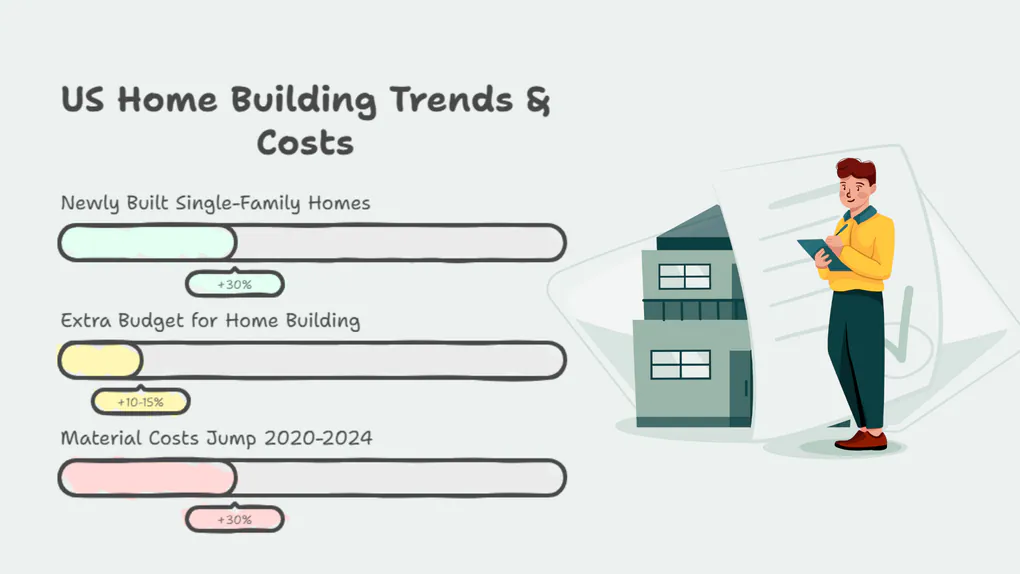
In recent years, building instead of buying has gained popularity across the U.S. According to data from the U.S. Census Bureau, newly built single-family homes now account for roughly 30 percent of total housing inventory, up from pre-pandemic levels. One major reason is customization. Buyers want energy efficiency, flexible layouts, and modern features that older homes often lack.
Another reason is the long-term value. While upfront costs can be higher, a newly built home typically requires less maintenance and offers better insulation and energy savings. In states like Texas, Florida, and Arizona, many homeowners report lower monthly utility bills in new builds compared to homes built before 2000.
Step 1: Decide If Building Is Right for You
Before you start sketching floor plans, it’s important to understand whether building fits your lifestyle and finances. Building your own house usually takes between 9 and 18 months from planning to move-in. If you need to relocate quickly, buying an existing home may be the better option. But if flexibility and personalization matter more, building can be a smart move.
A Pulse Real analysis shows that buyers who plan to stay in their homes for 10 years or longer often see stronger long-term ROI when they build, especially in growing metro areas. Tools like those discussed in How Real Estate Market Analysis Tools Shape Smarter Decisions can help you evaluate whether your local market supports new construction.
Step 2: Understand the True Cost of Building a House
A lot of people wonder what it takes to construct a home yourself across America. By 2025, putting up a typical detached house generally runs between $150 and $300 for each sq ft - this varies based on where you are, what stuff you use, or how hard it is to find workers.
A 2,000-square-foot house in the Midwest may run about $320,000 to construct; yet in California, it can go past $600,000. Land costs, permits, or connecting utilities aren’t necessarily part of that price.
Folks at the National Association of Home Builders say material costs jumped over 30% from 2020 to 2024, but lately prices have leveled off in lots of areas. Map out a sensible budget - tack on an extra 10–15% just in case - to stay safe.
Step 3: Buy Land That Matches Your Vision
If you're wondering how to begin building a house on your own property, kick things off by checking out the area first. Some plots aren't fit for construction right away. Check local zoning laws before buying, since things like ground condition or utility hookups can limit what you do. Out in the countryside, plan extra costs - like drilling a well or installing a septic tank. City sites usually have tighter regulations to follow instead.
In booming areas such as Austin or Raleigh, people who grabbed plots first ended up saving big - those dragging their feet paid way more. Pulse Real’s data usually reveals that lot values climb faster than house costs in hot development zones.
Step 4: Design Your Home
Good design stirs feelings - and that can spike expenses fast. Sure, tossing in more space or fancy touches feels great; still, sharp buyers weigh what they love against what sells well later. Team up with a designer or builder to match what buyers want nearby. In suburban spots, extra rooms can boost worth - think of four bedrooms for families. City living? Open spaces plus space to work from home often count more.
Stuff such as the Ultimate House Tour Guide - what to check before buying a home - can actually help when designing, since it shows what catches buyers’ eyes. While exploring layouts, knowing those details makes decisions clearer. Because real interest starts with first impressions, small things matter more than expected. Since every choice adds up, using that guide keeps focus on what counts.
Step 5: Secure Financing and Construction Loans
Many individuals avoid paying upfront when building. Rather, they rely on financing meant for construction, shifting later to standard home loans after finishing the house. These types of loans usually demand stronger credit ratings along with bigger initial contributions - sometimes at least a fifth of the total cost. Money gets handed out step by step during development; therefore, sticking to schedules becomes essential.
Some purchasers pick FHA when financing build-once projects, particularly those doing it alone for the first time. Alternatively, certain individuals check out regional credit unions since they may provide adjustable conditions. When cost becomes an issue, advice meant for single moms purchasing homes in 2025 might work just as well for independent constructors managing limited funds.
Step 6: Hire the Right Builder or Contractor
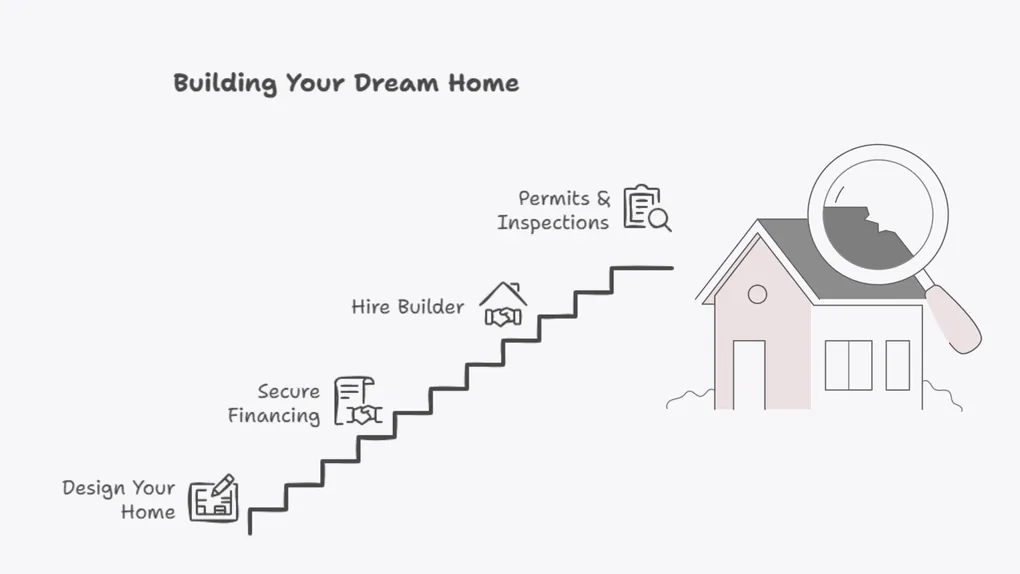
Your builder can make or break the experience. A reputable contractor will help you navigate permits, inspections, and timelines while keeping costs transparent.
In the U.S., licensed builders must meet state-specific requirements, but quality still varies. Always check references, review past projects, and confirm insurance coverage. A case study from Florida showed that homeowners who hired the lowest bidder faced delays of over six months, while those who paid slightly more finished on schedule and under budget due to better project management.
Step 7: Permits, Inspections, and Legal Requirements
Yeah, you can legally construct a home yourself in the U.S. - though rules from your area still apply. Each town or city sets its own standards for things like fire safety, insulation levels, plus land use - so check what’s required nearby before starting. Building approvals usually include footing jobs, structure setup, wiring, pipe systems, yet entry permission. Bypassing paperwork might bring penalties or problems when selling down the line.
With offices or combo buildings, schedules might shift due to big-picture market shifts. Take Pulse Real's look at holiday patterns - Black Friday’s effect on commercial spaces in 2025 shows how cash flow ups and downs can delay builds or limit worker access.
Step 8: Construction and Project Management
Once construction begins, expect regular decisions. From siding colors to fixture placements, staying involved helps avoid costly changes later.
Most builds follow a predictable sequence: site prep, foundation, framing, systems installation, interior finishes, and final inspections. Weather delays are common, especially in northern states.
Homeowners who set weekly check-ins with their builder often report smoother builds and fewer misunderstandings.
Step 9: Final Walkthrough and Move-In
Before closing, you’ll complete a final walkthrough to ensure everything meets contract specifications. Minor fixes, known as punch-list items, are normal.
Once approved, your construction loan converts to a mortgage, and you receive a certificate of occupancy. At that point, you’re officially home.
Conclusion
Picking the idea of building your own place isn't only about money - it's also a big life moment. Even though there are tons of stages involved, things get easier if you take them one at a time. Getting land, working out loans, then finding the correct contractor - each step changes what your future holds along with how solid your property turns out. If you really want to learn how to construct your own home, try using smart tech tools, check out what’s happening in your area’s housing scene, and also team up with experts who get what you're aiming for. When you plan well, putting together a house isn't some far-off dream - instead, it turns into one of the coolest adventures in property.
FAQs:
How much does it cost to build your own house?
In the U.S., most homeowners spend between $300,000 and $500,000, excluding land, depending on size and location.
Is it legal to build your own house in America?
Yes, but you must follow state and local zoning laws, building codes, and permit requirements.
Is it cheaper to buy or build a house in the US?
Buying is usually cheaper upfront, but buildings can offer better long-term value and lower maintenance costs.
If I want to build a house on my land, then Where do I start?
Begin with zoning verification, soil testing, and utility access before designing or financing the build.
Can I build my own house with no experience?
Yes, but most people hire licensed builders or contractors to manage construction and compliance.



_thumb.jpg)
